The Asian Products We Carry: Korean Ramen, Snacks, Frozen Desserts & More
The Asian Products We Carry: Korean Ramen, Snacks, Frozen Desserts & More
Pan-Asian groceries are no longer a niche category. Korean instant ramen now outsells legacy American noodle brands in major chains, viral TikTok favorites like Buldak Carbonara move thousands of units a week from independent stores, and Asian frozen desserts have crossed from ethnic markets into suburban supermarkets. If you're running a grocery store, ethnic market, convenience store, or online retail operation, the question isn't whether to carry Asian products — it's where to source them at margins that work.
This guide walks through every category of Asian wholesale products we carry at DJR Foods, the brand-level SKUs that actually move at retail, and how case and pallet pricing compares to going through a redistributor.
Korean Ramen: The 44% of Our Catalog That Drives Repeat Traffic
Korean instant ramen makes up the largest share of our catalog because, simply put, it's what your customers are buying. Three brands dominate the category and we keep deep inventory across the lineup of each:
- Nongshim — Shin Ramyun Original, Shin Black, Chapagetti, Neoguri Spicy Seafood, Shin Cup, and Bowl Noodle Soup. Nongshim is the global category leader and the gateway SKU for most American shoppers discovering Korean ramen for the first time.
- Samyang Buldak (Hot Chicken) — Original 2× Spicy, Carbonara (the single highest-velocity SKU we ship), Cheese, Curry, Habanero Lime, Ice Type, and Buldak Quattro Cheese. Buldak is the social-media engine of the category, with billions of views on the #FireNoodleChallenge.
- Paldo — Bibim Myun, King Cup, Volcano Chicken, Cheese Ramen, and Pasta Ramen. Paldo offers a strong-flavor, value-tier alternative that often outperforms expectations against Nongshim's flagship line.
For deeper context on where the category is heading, the Korea Trade-Investment Promotion Agency (KOTRA) tracks Korean food export volumes by destination — a useful primary source when forecasting US demand.
A balanced opening assortment is roughly 40% Nongshim, 35% Samyang, and 25% Paldo. Stores that lead with all three brands rather than concentrating on a single flagship typically see 25–40% higher overall ramen velocity in the first 30 days.
Asian Frozen Desserts: The 20% of Catalog That Most Stores Underweight
Korean and Japanese frozen desserts are one of the most underrated wholesale opportunities in Asian groceries. Demand has tripled at retail over the past five years, and the products carry strong margins because there's no domestic equivalent.
The frozen dessert SKUs we carry by the case and pallet:
- Binggrae Melona — the iconic green-melon ice bar; sells in multipack and single-serve formats
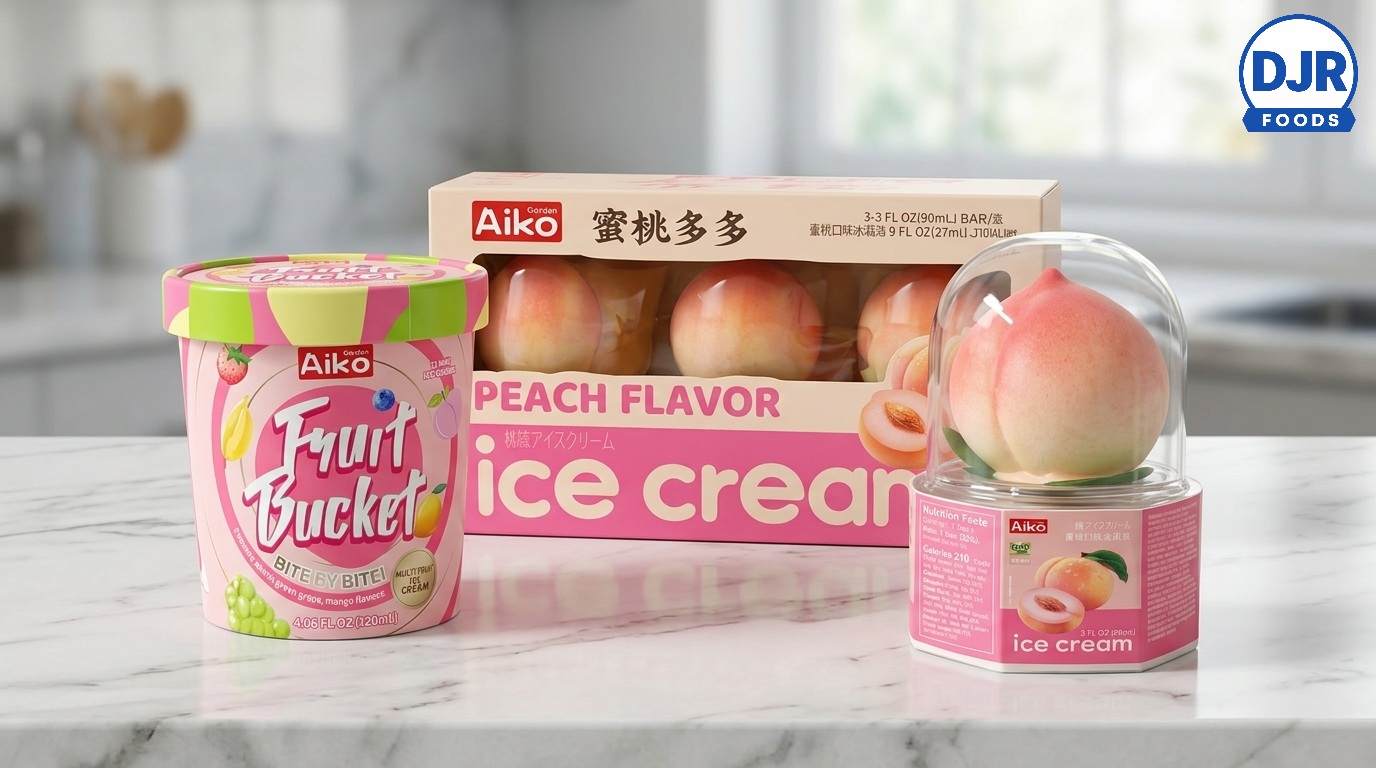
- Aiko Mochi Ice Cream — premium Japanese-style mochi in mango, strawberry, green tea, vanilla, chocolate
- NiceMe — Korean ice cream sandwich and bar formats with fast turnover in summer
- Hershey's-licensed Korean ice cream products — for stores that want a recognized US brand cross-over
These products require a working freezer, but for stores that have one, frozen desserts often deliver the highest dollar margin per cubic foot in the entire Asian-grocery section.
Imported Asian Snacks: The 22% of Catalog Driving Impulse Purchases
The imported chips and savory snacks tier is your impulse-purchase engine. Customers come in for ramen and leave with three additional items from the snack aisle. Our wholesale catalog covers the major categories:
- Lay's Asian-flavor releases — Honey Butter Chip, Wasabi Mayo, Spicy Crab, regional Korean and Japanese exclusives that don't ship through standard US distribution
- Orion — Choco Pie (the original and matcha variants), O! Karto, Sunchips Korea
- Lotte — Pepero (Original, Almond, Choco Filled, White Cookie), Crunky, Coomee
- Korean and Chinese branded snacks — Hot & Cold sweet/spicy varieties
For ethnic-grocery category benchmarks, the Specialty Food Association's annual State of the Industry report offers solid third-party data on Asian-product velocity in US specialty retail.
Asian Sodas and Milk Drinks: 15% of Catalog with Steady Volume
Asian beverages — sodas, milk drinks, and ready-to-drink coffees — round out the catalog. They occupy less square footage than the categories above but turn over reliably and complement ramen and snack purchases:
- Sangaria — Ramune-style sodas in fruit flavors that never get old with kids
- Binggrae Banana Milk and Strawberry Milk — iconic single-serve cartons; high impulse appeal
- Yakult-equivalent probiotic drinks — for stores that can manage chilled distribution
- Korean canned coffees and teas — espresso-style ready-to-drink in the 8–12oz range
Pan-Asian Coverage: Not Just Korean
While Korean SKUs anchor our catalog, we carry full pan-Asian inventory across Vietnamese, Japanese, Filipino, Thai, and Chinese product lines so retailers serving multi-Asian-American demographics can stock everything from a single account. Browse the DJR Foods product catalog for the full SKU list, or request a wholesale account to get account-level pricing on case and pallet quantities.
Importer-Direct Pricing vs. Going Through a Redistributor
Most "wholesale Asian groceries" sold in the US pass through a redistributor — a regional broker who buys from the importer and resells at a markup. Going importer-direct (which is what we are at DJR Foods) typically saves 18–28% per case versus redistributor pricing.
For a store doing 200 cases per month of Korean ramen alone, that's $1,500–$2,500 a month in margin you keep instead of paying to a middleman. Across a full Asian-grocery program of ramen, snacks, frozen, and beverages, the gap widens.
The catch is MOQ: importer-direct usually requires 5–10 cases per SKU (mixed) or full pallet quantities for the largest brands. For most independent stores moving real volume, that's an easy threshold to clear.
How to Verify a Wholesaler Is Actually Importer-Direct
A few quick checks separate real importers from rebadged redistributors:
- FDA Food Facility Registration — every legitimate US food importer has one. Verify on the FDA Food Facility Registration portal.
- Customs broker on file — a real importer can name theirs without hesitation.
- Direct manufacturer documentation — request a sample certificate of analysis (COA) or import bill of lading.
If a supplier dodges any of those, they're a redistributor reselling at markup.
Start Building Your Asian Wholesale Account
A balanced opening order across the four catalog tiers — Korean ramen, Asian frozen, imported snacks, and Asian beverages — gives stores instant credibility as an Asian-grocery destination. Most independent retailers see 30–60% increases in basket size within the first quarter of carrying a complete pan-Asian set, driven less by the individual SKUs than by becoming the store customers think of when they want any Asian product.
We work with grocery stores, ethnic markets, convenience stores, online retailers, and Asian-grocery e-commerce operators of every size — from single-location independents to multi-location chains.
Request a wholesale account to get current case and pallet pricing on the SKUs your customers are asking for. Our team responds within one business day with your account-level catalog and shipping quote.